8 minutes read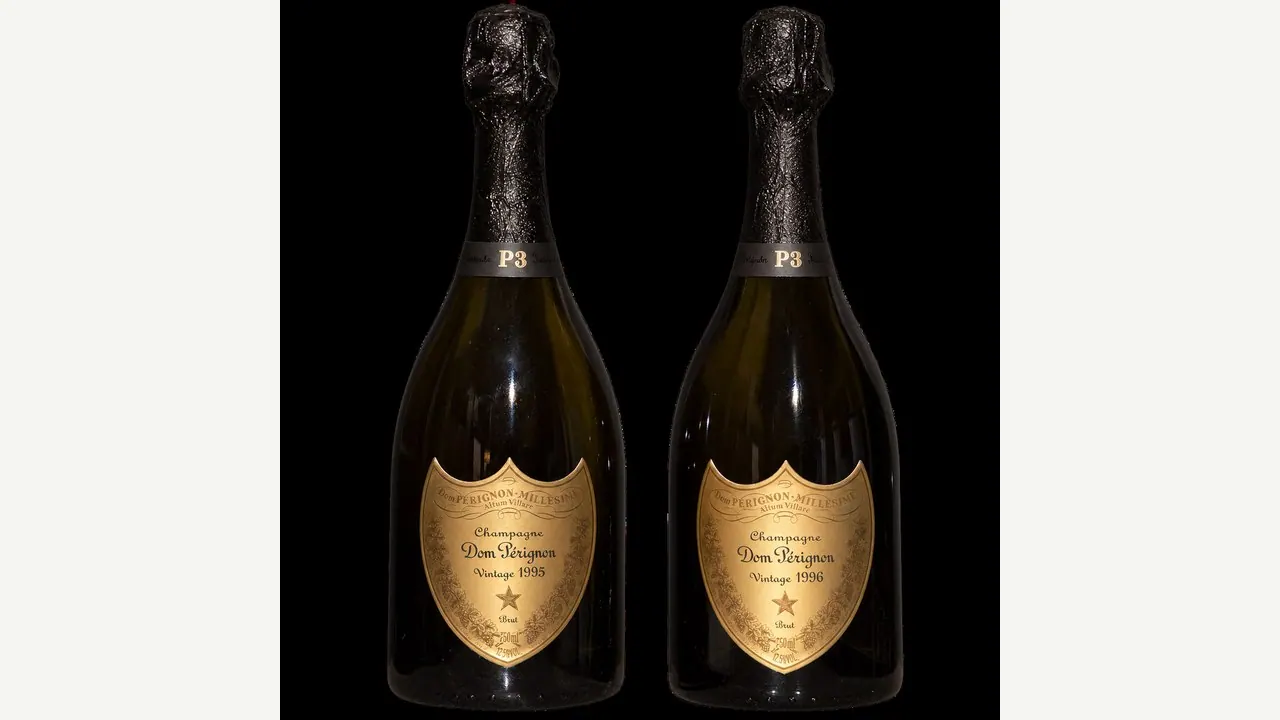
A rare vertical of Dom Pérignon P3: two vintages, 1995 and 1996, having reached their third plénitude after decades on the lees. What it means and what to observe.
The Dom Pérignon P3 vertical places two consecutive vintages side by side, 1995 and 1996, now observed at the same extreme stage of the house’s journey: the third Plénitude. The 1995 and 1996 are two vintages that critics have treated in opposite ways from the outset, and it is precisely this contrast that makes the pair interesting for collectors.
What is a P3 vertical
Dom Pérignon does not release a vintage just once: the same cuvée returns to the market at different moments, determined by the house based on the evolutionary stage reached, called plénitudes. The first Plénitude coincides with the initial release, after several years of maturation in the cellar. P2 generally arrives after approximately fifteen years, while P3 is reached only after decades of aging, often between thirty and forty years from the harvest. It is the latest disgorgement, reserved for a much smaller number of bottles than the other two.
A P3 vertical is therefore not a comparison between any two vintages, but between two bottles that have undergone the same very long journey in the cellar before being released to the market. In the past, long-aged releases were identified with the name Œnothèque; from 2014 the house progressively adopted the Plénitude nomenclature, distinguishing P2 and P3 based on the evolutionary stage reached. It is the house itself, not a fixed calendar, that determines when a vintage has reached the next plénitude, based on its evolution in the cellar.
The value of two vintages read together
The 1996 is considered one of the reference vintages of modern Champagne: a long, dry summer brought the grapes to high levels of maturity while maintaining, at the same time, exceptionally high acidity. It is this combination that built the vintage’s reputation from the outset and its vocation for long aging. Over time, its P3 expression has been described by specialist critics as a wine capable of acquiring balance and elegance with aging, overcoming the youthful austerity it showed at its first releases.
The 1995 tells a different story. After a series of more difficult vintages, it marked the return to an important quality vintage in Champagne. In its P3 expression it now shows a deeply evolved profile, in which notes of dried fruit, toastiness and more savory and tertiary components emerge. Here too, independent critics confirm a profile of great balance, capable of delivering aromatic depth without losing precision, a distinctive trait of the most successful P3 releases.
Having the two vintages side by side, both at the third plénitude, allows one to observe how the same cellar style produces different results depending on what happened in the vineyard thirty years earlier: this is why P3 verticals remain among the most closely followed releases by Dom Pérignon enthusiasts.
What to look for in a Dom Pérignon vertical
In a P3 vertical, provenance matters above all. After disgorgement and release from the house’s cellars, storage conditions, temperature and continuity of the chain of custody become central elements for bottles of this age. Non-optimal storage, even for a limited period, can affect the final profile more than it would with younger wines, precisely because of the very long journey already completed before market release. It is also worth examining the label and capsule, which Dom Pérignon updates at each plénitude to visually distinguish releases, and this is a detail that collectors always verify before considering the pairing authentic.
Il mercato secondario tratta da tempo le uscite P3 come una fascia a parte rispetto alle annate correnti del marchio, per via dei volumi molto più limitati e della lunga attesa che le precede: è uno dei motivi per cui una verticale completa, con due annate dal profilo critico così diverso, attira l’attenzione di chi segue da vicino le uscite più mature della maison.
Come si acquistano le quote di Dom Pérignon P3 su Collecto
Su Collecto le quote di una verticale come questa si acquistano online, con una procedura che segue da vicino quella di un qualsiasi acquisto digitale: si sceglie l’importo, si completa il pagamento e la quota viene registrata a proprio nome, senza dover gestire direttamente la custodia fisica delle bottiglie. Per capire nel dettaglio come funziona l’intero percorso, dalla selezione del bene fino all’eventuale rivendita della quota, la pagina dedicata spiega ogni passaggio con esempi concreti.
Chi si avvicina per la prima volta a una verticale di questo livello trova in Collecto un modo che permette di accedere a una tipologia di bene caratterizzata da valori unitari elevati senza dover acquistare l’intero lotto.
Scopri Dom Pérignon P3 (1995-1996) su Collecto
Su Collecto puoi acquistare quote di Dom Pérignon P3, verticale 1995-1996, a partire da 50€, accedendo a due delle espressioni più mature della maison senza acquistare l’intero lotto.
Domande frequenti su Dom Pérignon P3
Che cos’è la plénitude P3 di Dom Pérignon?
È la terza e più tardiva delle fasi di maturazione in cui Dom Pérignon rilascia la stessa annata: dopo l’uscita iniziale e la seconda plénitude, raggiunta generalmente dopo circa quindici anni, la P3 arriva solo dopo decenni di affinamento sui lieviti, spesso tra i trenta e i quarant’anni dalla vendemmia, quando la maison giudica il vino pronto per questa fase.
Why was P3 called Œnothèque?
In the past, long-aged releases were identified with the name Œnothèque; from 2014 the house progressively adopted the Plénitude nomenclature, distinguishing P2 and P3 based on the evolutionary stage reached.
What vintage is the 1996 Dom Pérignon?
The 1996 is considered one of the reference vintages of modern Champagne: a long, dry summer brought the grapes to high levels of maturity while maintaining, at the same time, exceptionally high acidity. It is this combination that built the vintage’s reputation from the outset and its vocation for long aging.
What vintage is the 1995 Dom Pérignon?
The 1995 tells a different story. After a series of more difficult vintages, it marked the return to an important quality vintage in Champagne. In its P3 expression it now shows a deeply evolved profile, in which notes of dried fruit, toastiness and more savory and tertiary components emerge.
Why does a vertical of two P3 vintages interest collectors?
Because it compares, at the same stage of maturation, two vintages that critics have judged in opposite ways from the outset, showing how the same very long aging enhances in different ways what happened in the vineyard.